Car insurance for high-risk drivers: options and strategies to lower costs
Let’s be honest — being labeled a “high-risk driver” feels a bit like being handed a scarlet letter. Your insurance premium skyrockets, and suddenly you’re paying more for your car insurance than you do for your actual car. But here’s the thing: it’s not a life sentence. There are real, actionable strategies to lower your costs, and honestly, some of them are surprisingly simple.
In this guide, we’ll break down what makes you high-risk, the insurance options available to you, and — most importantly — the strategies to get those premiums down. No fluff, just practical advice.
First things first: what actually makes you “high-risk”?
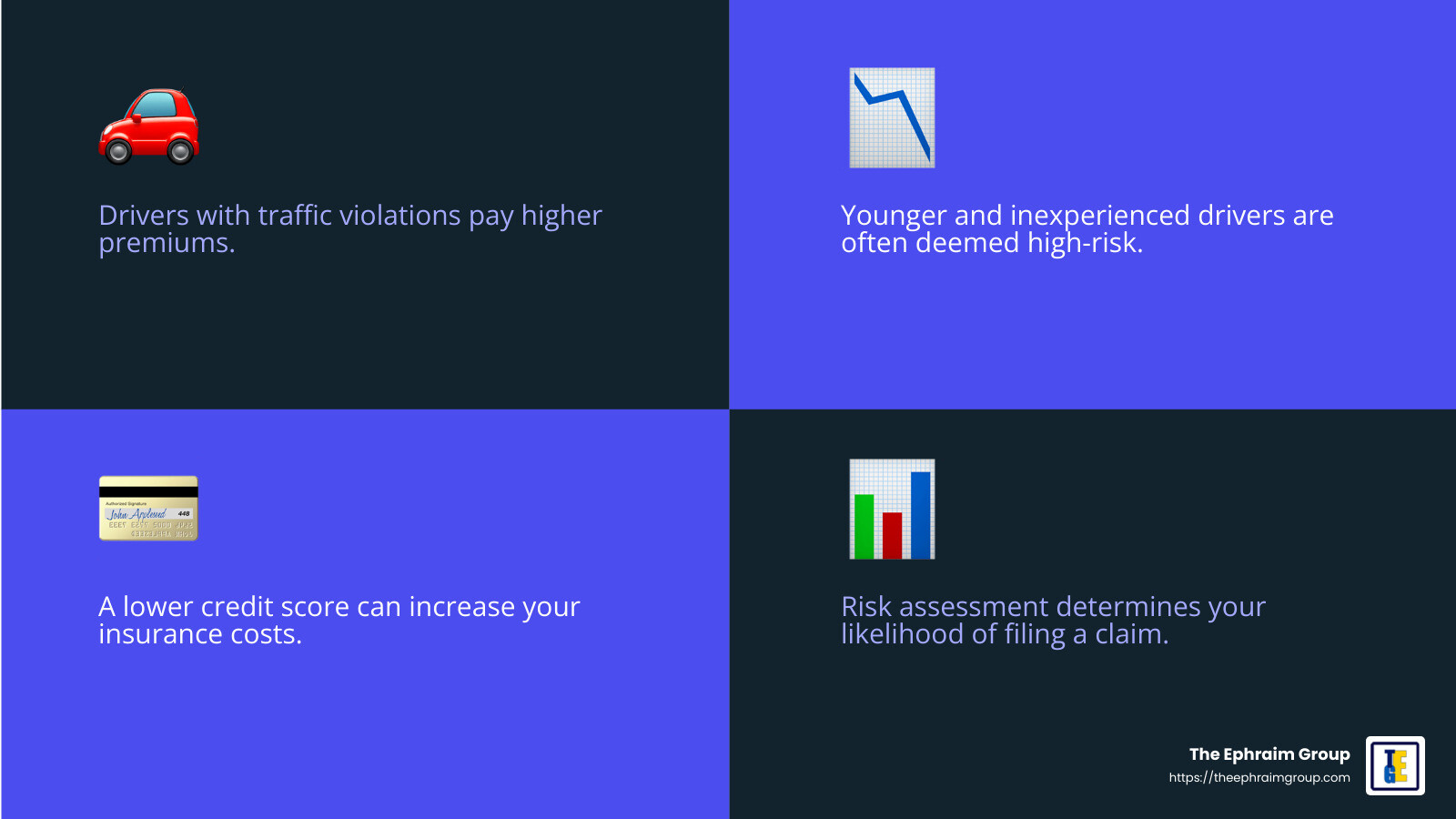
Insurance companies aren’t judging you personally — they’re running numbers. High-risk simply means you have a higher statistical probability of filing a claim. Common triggers include:
- DUI or DWI convictions (these are the big ones)
- Multiple at-fault accidents in a short period
- Serious traffic violations — think reckless driving, excessive speeding
- Lapses in coverage (even a 15-day gap can do it)
- Being a young driver under 25, especially male
- Having a poor credit score (in most states, this matters a lot)
Here’s the deal: each insurer weighs these factors differently. So one company’s “high-risk” might be another’s “acceptable risk.” That’s your first clue — shopping around isn’t just a suggestion; it’s a necessity.
Your options: where to get coverage when you’re high-risk
Okay, so you’ve been classified as high-risk. You still have options — more than you might think. Let’s walk through them.
1. Standard insurers (with a twist)
Some big-name insurers — like Progressive, Geico, and even State Farm — have divisions that handle high-risk drivers. They won’t advertise it, but they’ll still quote you. The catch? Your premium will be higher than a standard driver’s. But it’s often cheaper than going to a specialty company.
2. Non-standard insurance companies
These are the specialists. Companies like The General, Dairyland, or SafeAuto specifically cater to high-risk drivers. They’ll take you when others won’t — but you’ll pay for that flexibility. Premiums can be 2x to 3x higher than standard rates. Still, it’s better than driving uninsured, which is illegal and financially reckless.
3. State-assigned risk pools (last resort)
If no private insurer will touch you, most states have a “residual market” — often called the assigned risk plan. It’s basically a pool where insurers share the risk. Coverage is basic, and it’s expensive. But it keeps you legal. Think of it as a safety net, not a long-term solution.
Strategies to lower your costs — starting right now
Alright, here’s where the rubber meets the road. You don’t have to just accept high premiums. Use these strategies to chip away at your costs.
Compare quotes like your wallet depends on it (because it does)
I know, I know — you’ve heard this a thousand times. But here’s the nuance: for high-risk drivers, the rate difference between insurers can be massive. Like, $1,500 a year massive. Don’t just check two companies. Check five or six. Use comparison sites, but also call local independent agents who can access multiple carriers. They sometimes know which companies are quietly lenient on DUIs or lapses.
Pro tip: when you get a quote, make sure you’re comparing apples to apples — same coverage limits, same deductibles. Otherwise, you’re just comparing chaos.
Raise your deductible — but do the math first
This is the classic move. If you raise your collision and comprehensive deductibles from $500 to $1,000, you can often save 10-20% on those portions of your premium. But — and this is important — you need to have that $1,000 in the bank. Don’t raise your deductible if you can’t cover it after an accident. That’s just trading a high premium for a potential financial crisis.
Take a defensive driving course (seriously, it works)
Many insurers offer a discount — usually 5-10% — for completing an approved defensive driving course. It’s a few hours of your time, often online, and it signals to the insurer that you’re trying to be safer. For high-risk drivers, this can also help in a more subtle way: it shows good faith. Some companies will even remove a point from your record if you take the course (depending on your state).
Bundle everything you can
If you have renters or homeowners insurance, put it with the same company as your car insurance. Bundling can save you up to 25% in some cases. Even if you’re high-risk, the multi-policy discount still applies. And if you have a second car — even if it’s a beater — insure it on the same policy. Multi-car discounts are real.
Consider usage-based insurance (UBI)
This one’s a game-changer for some. Programs like Progressive’s Snapshot or State Farm’s Drive Safe & Save use a telematics device (or your phone’s app) to track your driving habits. If you drive less, avoid hard braking, and don’t speed, you can earn discounts of 10-30%. But here’s the catch: if you drive like a maniac, it can raise your rate. So only do this if you’re genuinely a decent driver who just got unlucky with a DUI or a couple of tickets.
Drop unnecessary coverage — but only the right ones
If your car is old and worth less than $3,000, consider dropping collision and comprehensive coverage entirely. The math is simple: if your annual premium for collision is $800 and the car is only worth $2,000, you’re over-insuring. Keep liability (it’s legally required) and uninsured motorist coverage, but let go of the rest. That said, don’t drop liability limits to save a few bucks — that’s a disaster waiting to happen.
The waiting game: how time heals your premium
Here’s the thing nobody tells you: high-risk status isn’t permanent. Most violations stay on your record for 3-5 years. A DUI might linger for 5-7 years, depending on the state. But as time passes, your risk score improves. Insurers review your record periodically — often at renewal — and your rates can drop automatically.
So, what’s the strategy? Don’t switch insurers every year if you’re high-risk. Stay with one company for 2-3 years, maintain a clean record, and let the clock work in your favor. Then, once the violation is older, start shopping around again. That’s when you’ll see the real savings.
Credit score: the silent factor you can fix
In most states (sorry, California, Hawaii, and Massachusetts), your credit score is a major factor in your auto insurance rate. High-risk drivers often have lower credit scores — it’s a correlation thing. But here’s the good news: credit is fixable. Pay down balances, dispute errors, and keep old accounts open. Even a 50-point credit score improvement can translate to hundreds of dollars in annual savings. It’s not a quick fix, but it’s a powerful one.
What about SR-22 insurance? (Let’s clear this up)
You might hear the term “SR-22” and assume it’s a type of insurance. It’s not. It’s a certificate your insurer files with the state to prove you have liability coverage. You’ll need one after a DUI or serious violation. It’s not a separate policy — it’s just a form. And yes, it costs extra (usually $15-25 per filing), but it’s temporary. After 1-3 years, you can often drop it, and your rates will improve.
A quick table to visualize your options
| Strategy | Potential Savings | Effort Level | Time to Benefit |
|---|---|---|---|
| Shop around (multiple quotes) | 10-40% vs. current | Low | Immediate |
| Raise deductible | 10-20% | Low | Immediate |
| Defensive driving course | 5-10% | Medium | 1-3 months |
| Usage-based insurance | 10-30% | Medium | 1-6 months |
| Bundle policies | 10-25% | Low | Immediate |
| Improve credit score | 15-30% | High | 6-12 months |
| Wait for record to age | 20-50% | None | 2-5 years |
One more thing: don’t drive uninsured. Ever.
I get it — the premiums feel unfair. But driving without insurance is a gamble with terrible odds. A single at-fault accident without coverage can lead to lawsuits, wage garnishment, and a license suspension. And when you finally get insurance again, the lapse in coverage will make you even more high-risk. It’s a downward spiral. So even if it’s a bare-bones liability policy, keep something active.
The bottom line (and a thought to leave you with)
Being high-risk doesn’t mean being high-cost forever. It’s a phase, not an identity. The strategies above — shopping around, raising deductibles, taking courses, improving credit — they all chip away at that premium. And time, well, time is your quiet ally. Each clean month you drive is a