Battery Degradation Patterns in Used Electric Vehicles and Resale Value Implications
Let’s be honest — buying a used EV feels a bit like buying a phone without knowing how often the previous owner charged it to 100% and left it plugged in overnight. You know the battery has a lifespan. You just don’t know how much of it is left. And unlike a phone, replacing an EV battery can cost more than a decent vacation… or a small used car.
So what actually happens to EV batteries over time? And how does that translate into dollars when you try to sell one? Let’s dig into the real-world patterns, the data behind them, and what it all means for your wallet.
The Short Version: EV Batteries Don’t Die Like You Think
Here’s the deal. Most modern EV batteries — the lithium-ion packs in Teslas, Chevy Bolts, Nissan Leafs, and the rest — don’t just drop dead one day. They degrade gradually. You lose a little range here, a little acceleration there. It’s more like a slow leak than a blown tire.
Research from fleet data and independent studies (think Geotab, Recurrent, and various university labs) shows that average degradation is roughly 2% to 3% per year for newer packs. But that average hides a lot of variation. Some cars lose 1% a year. Others lose 5%. And a few unlucky ones? They hit a cliff.
The Two Main Patterns: Linear vs. Cliff
You’ll see two broad shapes in battery degradation curves.
Linear degradation is the friendly one. The battery loses capacity at a steady, predictable rate. After 100,000 miles, you might be at 90% of original range. After 200,000, maybe 80%. That’s manageable. Buyers can plan for it.
Cliff degradation is the nightmare. The battery holds up fine for years… then suddenly drops 10% or 15% in a matter of months. This often happens in older EVs with poor thermal management (looking at you, early Nissan Leafs) or in cars that were frequently DC fast-charged in hot climates.
Why the cliff? It usually comes down to one weak cell or module. The battery management system can only balance so much. Once one part fails, the whole pack suffers.
What Actually Accelerates Degradation?
Not all miles are created equal. Here are the big factors that chew through battery health:
- Frequent DC fast charging — especially in hot weather. Heat is the enemy.
- Charging to 100% and leaving it there — lithium batteries are happiest between 20% and 80%.
- Extreme climates — Phoenix summers and Minnesota winters both take a toll, though heat is worse long-term.
- Age, not just mileage — a 2015 EV with 30,000 miles may have worse battery health than a 2020 EV with 80,000 miles.
- Liquid cooling vs. air cooling — liquid-cooled packs (Tesla, Chevy Bolt after 2017) age far more gracefully than air-cooled ones.
Sure, you can baby a battery. But most used EVs were leased, fleet-driven, or charged by someone who just didn’t care. That’s the reality of the used market.
How Degradation Hits Resale Value
Here’s where it gets interesting — and a little frustrating for sellers.
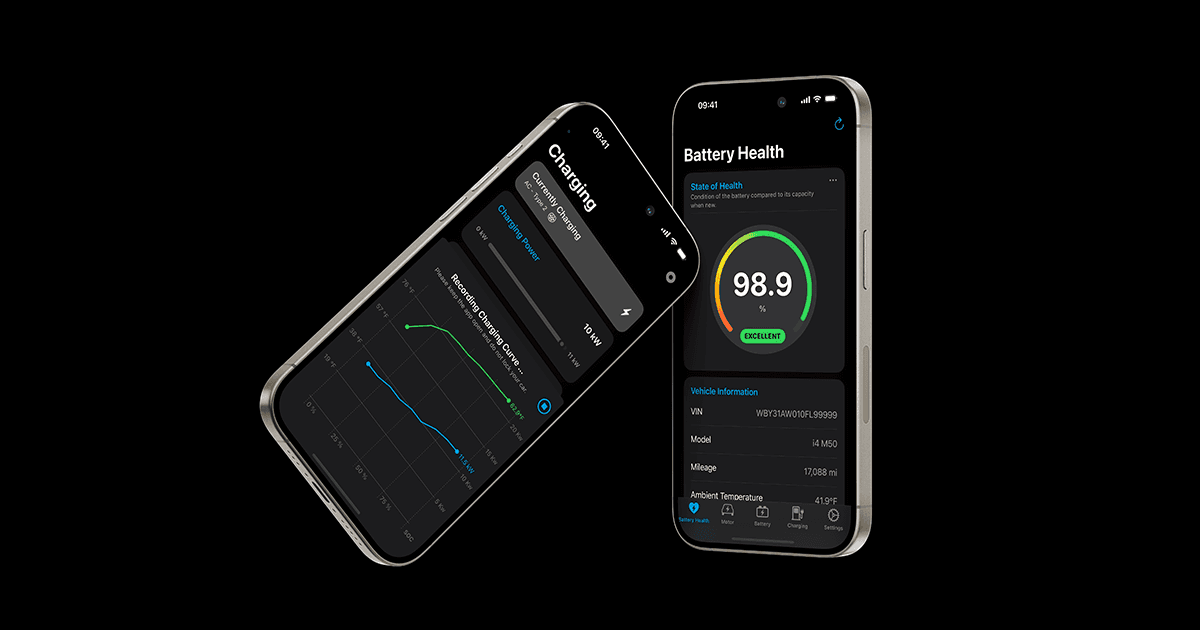
Traditionally, cars depreciate based on age, mileage, condition, and brand. EVs add a fifth pillar: battery state of health (SOH). That’s a percentage — 100% means like-new capacity, 80% means you’ve lost a fifth of your range.
But buyers and dealers don’t always have that number. Many used EVs are sold without a formal battery health report. That uncertainty gets priced in — usually against the seller.
| Battery SOH | Typical Buyer Perception | Resale Impact (vs. 100% SOH) |
|---|---|---|
| 95–100% | Like new | Minimal loss |
| 85–94% | Good, normal wear | 5–15% lower |
| 75–84% | Usable but aging | 20–35% lower |
| Below 75% | Risky, range anxiety | 40–60% lower |
Those numbers aren’t gospel — they vary by model, demand, and region. But the pattern holds. Once a used EV drops below 80% SOH, its resale value falls off a cliff of its own.
The Tesla Exception (and Why It Matters)
Teslas tend to hold value better than most EVs. Partly it’s brand hype. Partly it’s the Supercharger network. But mostly it’s because Tesla packs have robust thermal management and often show slower degradation.
A 2018 Model 3 with 100,000 miles might still show 90% SOH. That’s remarkable. Compare that to a 2016 Leaf with 60,000 miles that’s already at 78%. The Leaf might sell for $6,000. The Tesla for $22,000.
That said, even Tesla isn’t immune. Early Model S packs (2012–2014) had their own issues. And frequent Supercharging in Arizona? That’ll still sting.
What Buyers Should Actually Do
If you’re shopping for a used EV, don’t just kick the tires. Ask for a battery health report. Tools like Recurrent, Geotab, or even a simple OBD-II scanner can give you a rough SOH estimate.
Also consider:
- Warranty remaining — most EV batteries have 8-year/100,000-mile warranties. That’s your safety net.
- Climate history — a car from Seattle is a better bet than one from Phoenix.
- Charging habits — ask the seller. They might lie, but the answer still tells you something.
- Replacement cost — a new pack for a Chevy Bolt runs $16,000+. For a Tesla Model 3, closer to $13,000–$20,000. Factor that in.
The Weird Economics of a Degraded EV
Here’s a counterintuitive truth: a used EV with 70% SOH can still be a fantastic deal — if the price is right. Maybe you only drive 30 miles a day. Maybe you have a second car. Maybe you just want a cheap commuter.
In fact, some buyers specifically seek out degraded EVs for local driving, then sell them again in a few years. The depreciation already happened. You’re just renting the remaining capacity.
But for sellers? A degraded battery is a tough pill. You either accept a lowball offer or pay for a refurbished pack to boost the sale price. Sometimes the math works. Sometimes it doesn’t.
What’s Changing in 2025 and Beyond
The market is maturing. Battery health reports are becoming more standardized. Some dealers now advertise SOH right on the listing. And new chemistries — like LFP (lithium iron phosphate) — degrade more slowly and tolerate 100% charging better.
We’re also seeing more second-life applications. A degraded EV battery at 70% SOH might be useless for a car but perfect for home energy storage. That creates a floor for resale value. Not a high floor, but a floor.
Honestly, the biggest shift is psychological. Buyers are learning that a 90% SOH EV isn’t “damaged.” It’s just… used. Like a laptop with a slightly worn keyboard. Still works. Just not perfect.
The Bottom Line for Resale
If you own an EV and plan to sell it, here’s your playbook:
- Get a battery health report before listing. Transparency pays.
- If SOH is above 85%, highlight it. That’s a selling point.
- If SOH is below 75%, consider a refurbished pack or price aggressively.
- Document your charging habits if they were gentle. Buyers love a garage-kept, slow-charged car.
And if you’re buying? Don’t fear degradation. Understand it. Price it in. Then enjoy the silence, the torque, and the fact that you’re not paying $4 a gallon.
The battery isn’t a mystery forever. It’s just a number. And numbers can be negotiated.